
A literary world of love, beauty, and impermanence
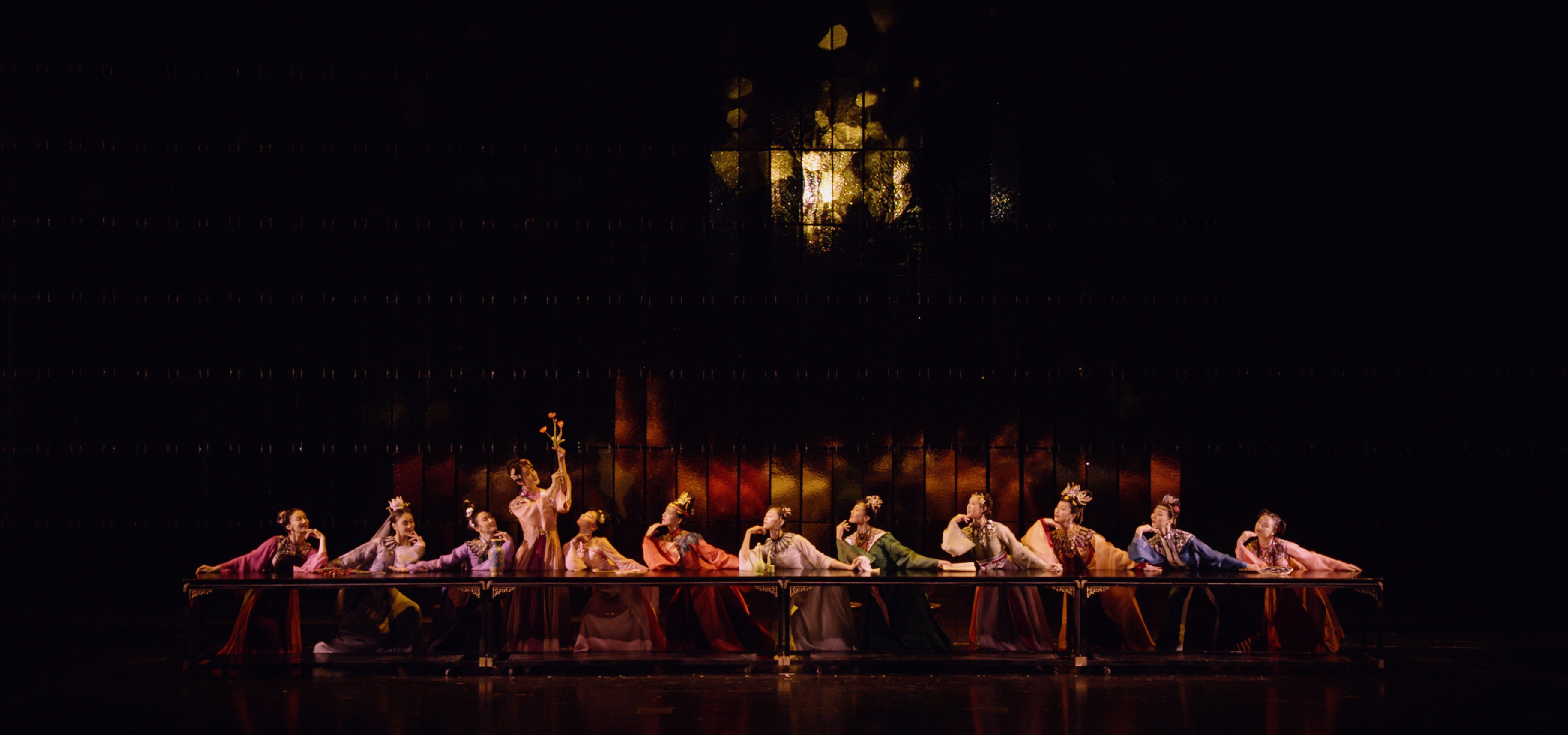
Behind the gates of the Grand View Garden, poetry, ceremony, and private desire flourish within one of China's most powerful households. Beauty is everywhere. But its foundations are already beginning to give way. Inspired by Cao Xueqin's Dream of the Red Chamber (Honglou Meng), one of China's Four Great Classical Novels, A Dream of Red Mansions follows three young people caught between love, family expectation, and fate. As the Jia family moves from splendor toward decline, intimate relationships unfold against a larger portrait of privilege, social order, and impermanence.
This award-winning dance drama translates a vast literary world into movement, allowing gesture, fabric, light, music, and space to reveal what words leave unspoken.
Three young people, three different ways of moving through love, duty, and change.
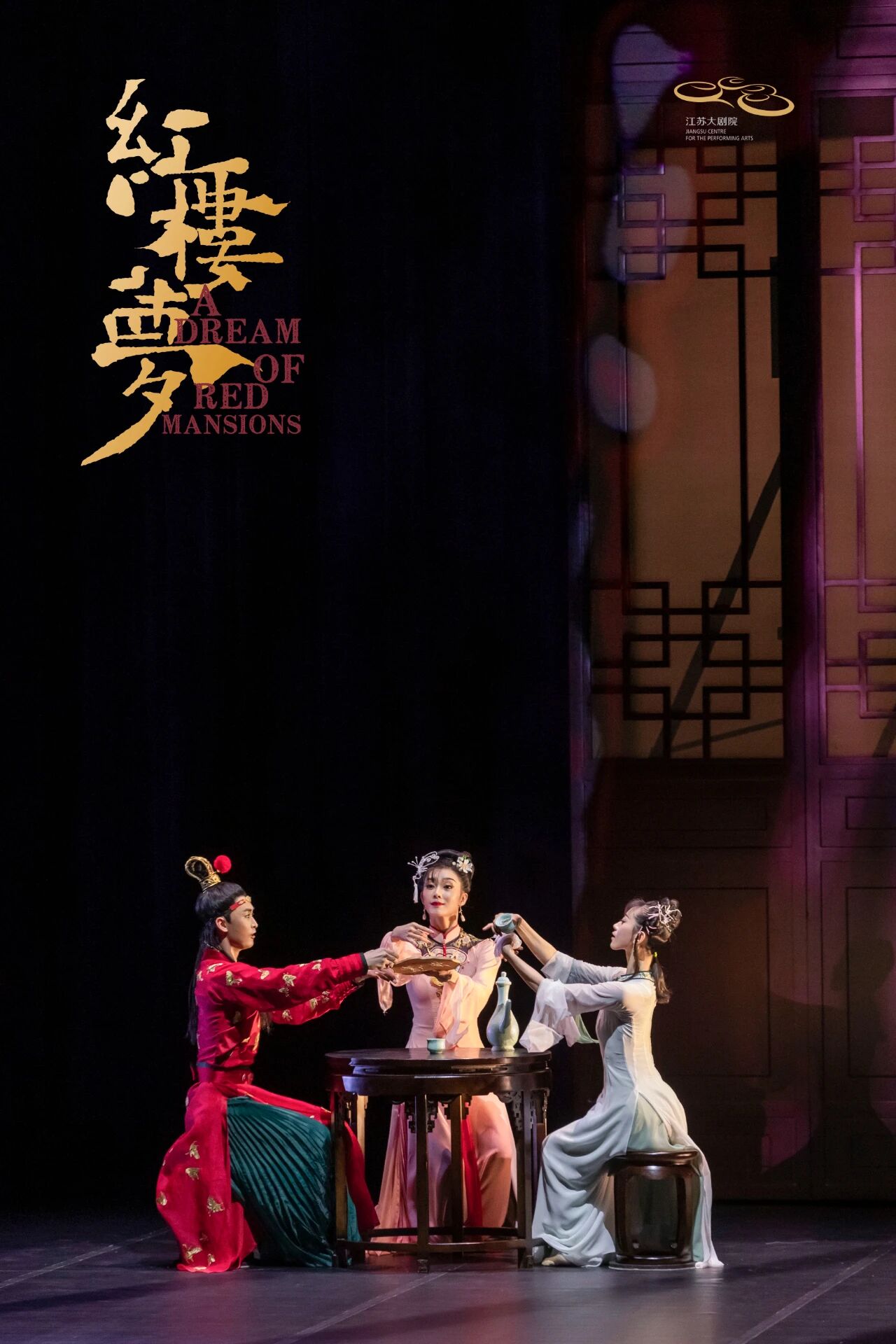
Sensitive and instinctively drawn to feeling over status, Baoyu resists the roles and relationships chosen for him. His story turns on a quiet struggle between personal emotion and the expectations of family and society.
Brilliant, perceptive, and deeply sensitive, Daiyu moves through the Jia household with little instinct for compromise. She values sincerity over social ease, which makes her at once fiercely independent and increasingly vulnerable to the expectations around her.
Composed, accomplished, and perceptive, Baochai understands the world's expectations and knows how to move within them. Her restraint and social intelligence let her navigate family, duty, and affection with remarkable ease.
The production unfolds through twelve chapter-like dance sequences, drawing on the structure of traditional Chinese fiction. Each chapter stands as its own visual and emotional world. Together, they move from arrival and splendor to love and illusion, separation and decline, loss and return.
01 入府
Entry
02 幻境
Illusory Land
03 含馥
Covetous Whispers
04 省亲
Imperial Visitation
05 游园
Promenade
06 葬花
Burial of Flowers
07 元宵
Lantern Festival
08 丢玉
Loss of Jade
09 冲喜
Warding-off Evil
10 团圆
Family Reunion
11 花葬
Flower Burial
12 归荒
Back to the Wilderness
Costume design in A Dream of Red Mansions does more than recreate a historical period. It gives visible form to personality, status, and fate. Drawing on Ming and Qing dynasty painting, illustrated editions of Dream of the Red Chamber, and Chinese opera traditions, costume designer Li Kun creates a visual language that is historically grounded and shaped for contemporary movement. Across the production, color, silhouette, embroidery, and floral imagery distinguish each of the women of the Grand View Garden.
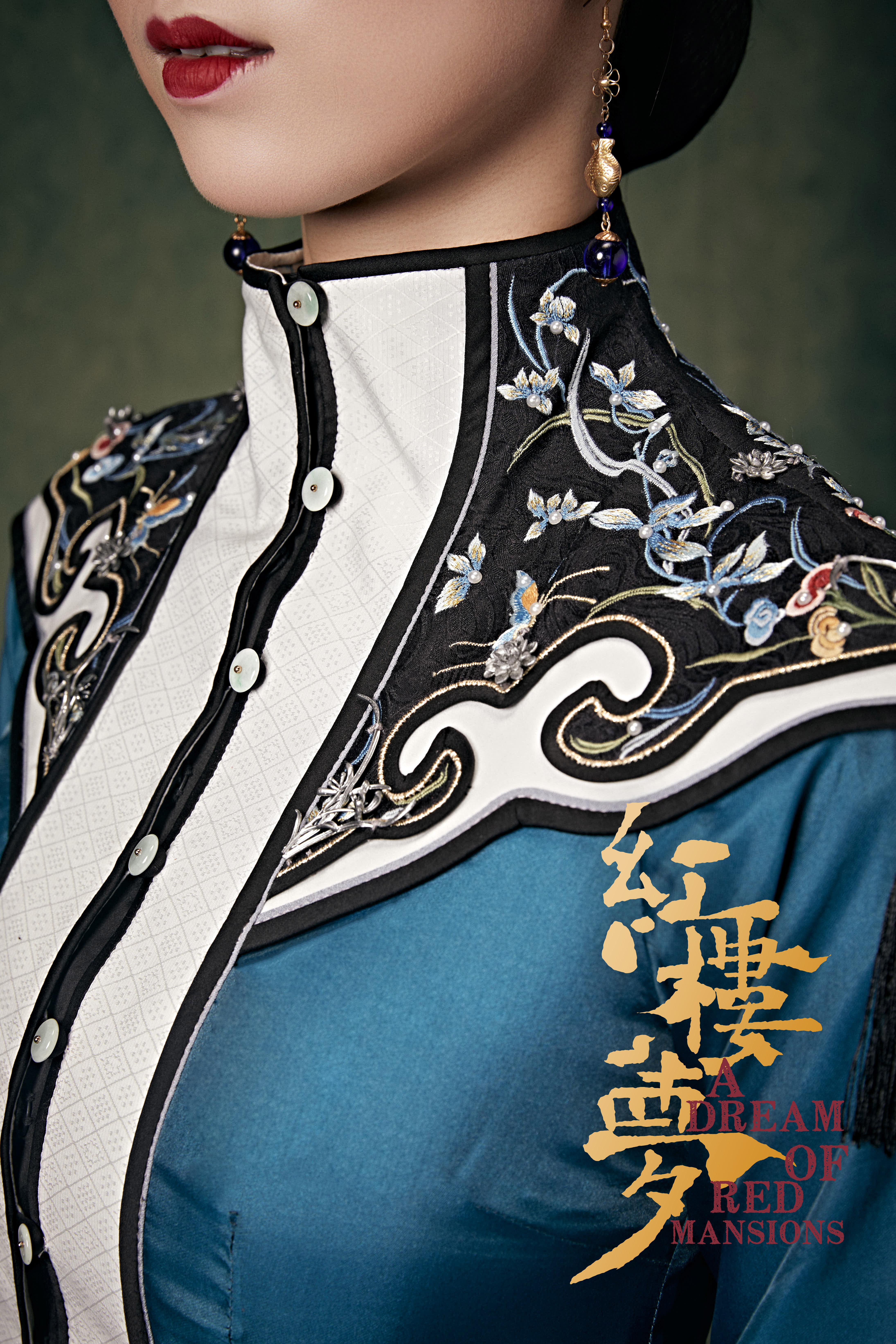
A yunjian, or cloud collar, is a decorative garment worn around the neck and shoulders. In the production, its flower-shaped structureframes the dancer's upper body, creating a sense of ceremony while extending the visual rhythm of each movement. The design evokes the splendor of the household without tipping into excess. Luxurious, but restrained.
The Twelve Beauties of Jinling are the women at the emotional center of the novel. Cao Xueqin frequently associates each of them with a particular flower. The production carries that symbolism into its costumes, where blossoms appear in different forms, colors, and stages of bloom. Each flower becomes more than decoration. It reflects a woman's temperament, her inner life, and the destiny already waiting for her.
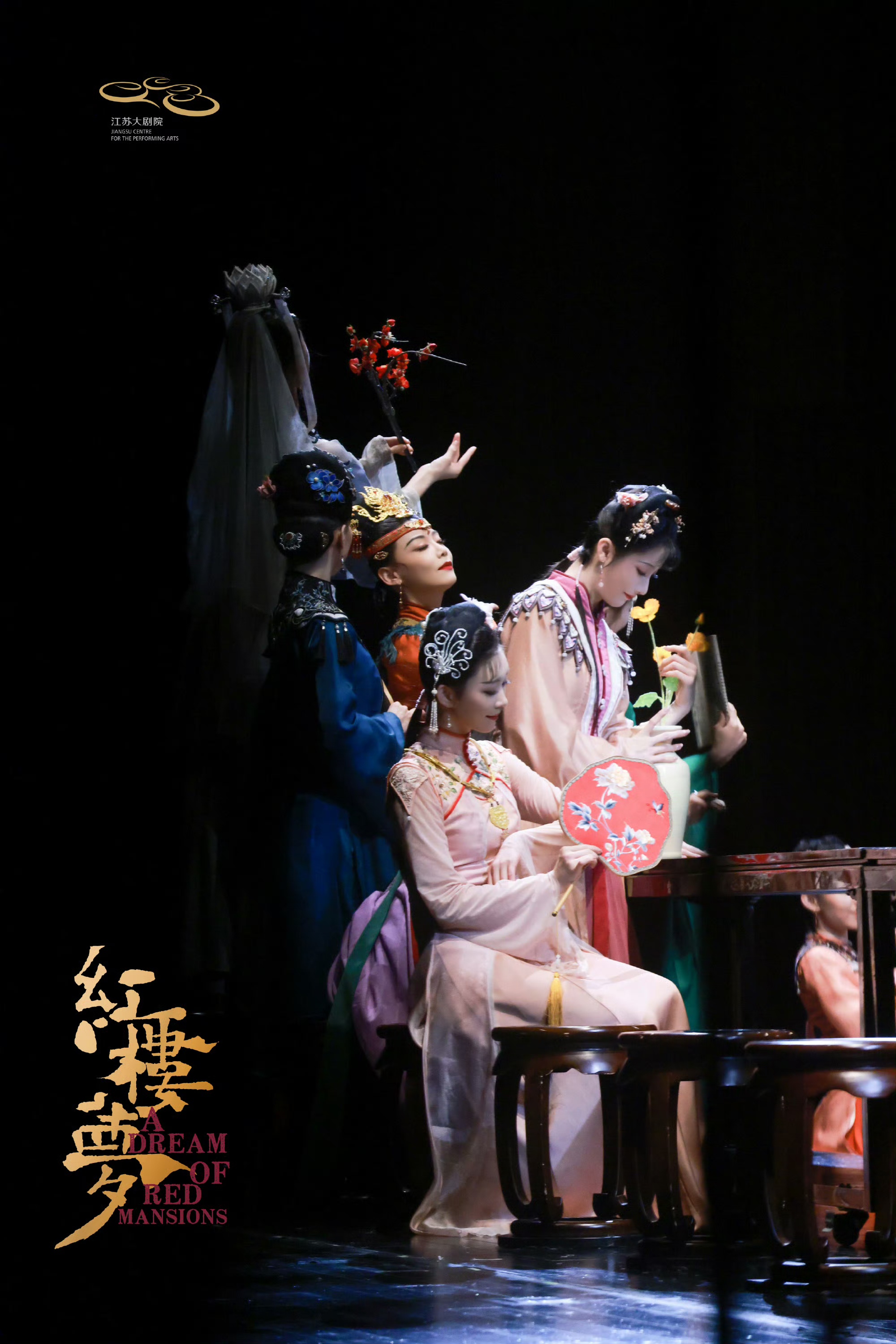
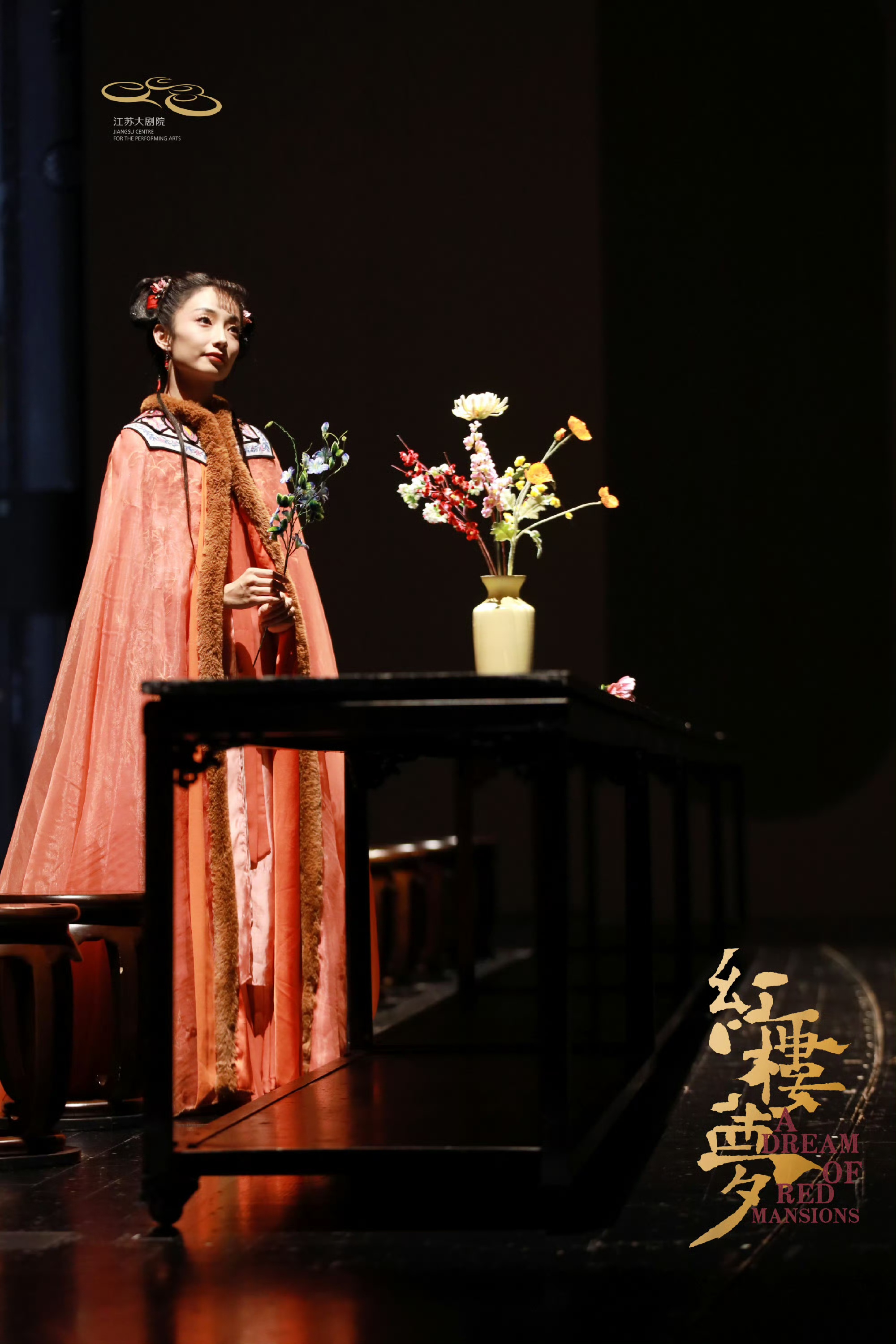
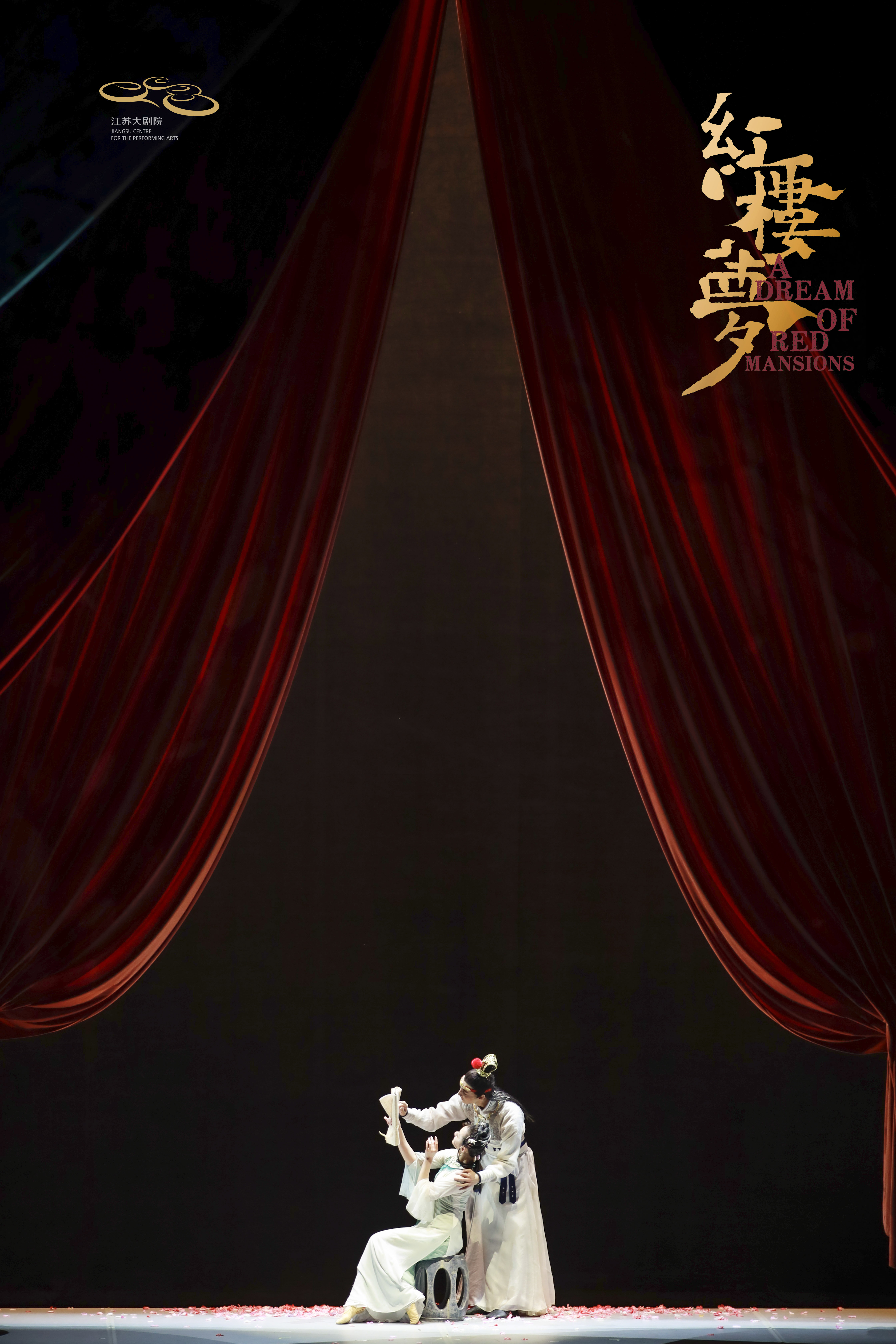
The production avoids literal, heavily constructed scenery. Curtains, screens, tables, chairs, rotating platforms, projected ink landscapes, and carefully placed light create a world that is both real and imagined. Like a Chinese painting, the stage leaves space for what is absent, allowing the audience to complete the image through memory and imagination.
Written nearly three centuries ago by Cao Xueqin, Dream of the Red Chamber is one of the most significant works in Chinese literature. It follows the slow decline of the Jia, Shi, Wang, and Xue families across private chambers, formal ceremonies, gardens, festivals, marriages, and moments of quiet grief. Its scale is vast. Its power is intimate. The novel is built as a cyclical world rather than a linear plot. It moves between waking life and dream, between the enclosed geography of the Grand View Garden and the wider order beyond its walls, and it frames its characters through paired contrasts of love and duty, privilege and instability, beauty and impermanence, appearance and truth, so that no one figure can be understood alone.
At the center of the story are its women. Intelligent, poetic, ambitious, restrained, rebellious, and deeply individual. Their lives reveal not only the beauty of the world they inhabit but also the limits imposed on them within it. Across generations of readers, Dream of the Red Chamber has endured as a family epic and a psychologically rich portrait of human life, watched one small moment at a time as an entire way of being comes apart from within.
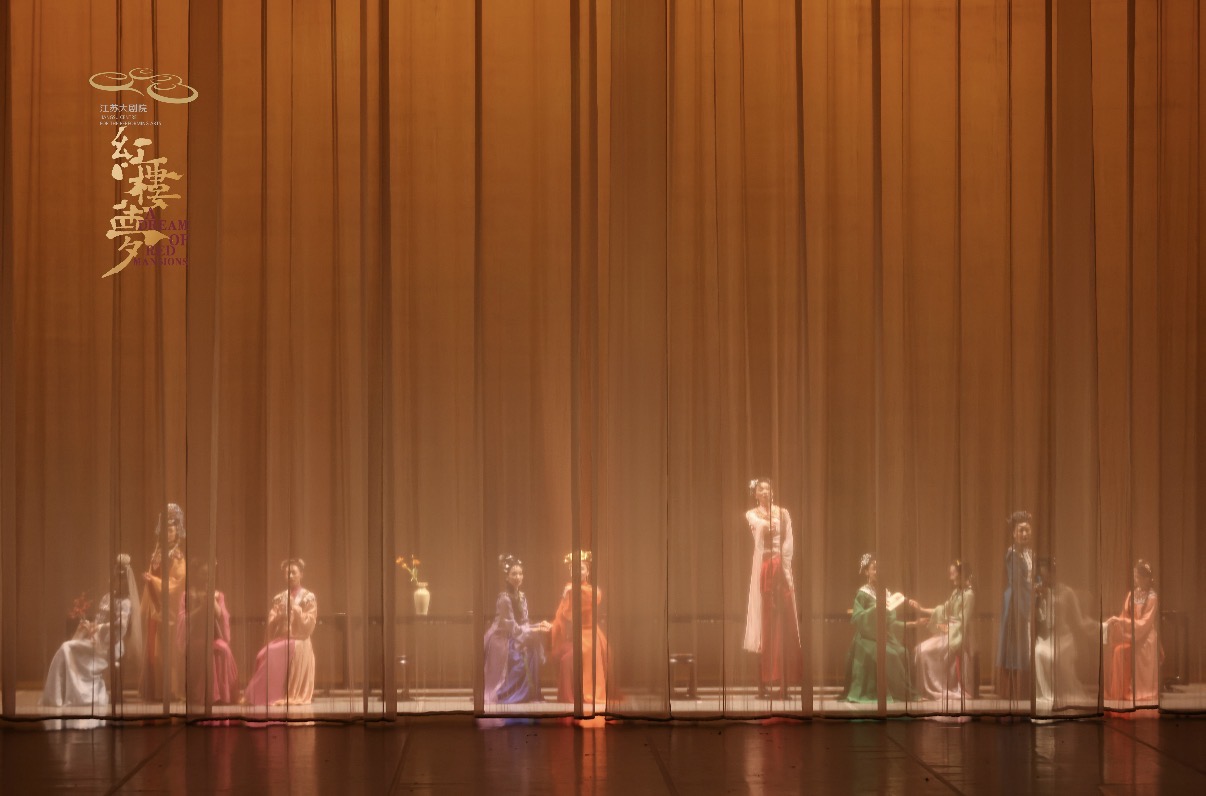
A Dream of Red Mansions is commissioned and presented by the Jiangsu Centre for the Performing Arts, with academic guidance from the Research Institute of A Dream of the Red Chamber at the Chinese National Academy of Arts. The production brings together a young, multidisciplinary creative team committed to honoring the novel without turning the stage into aliteral illustration of it.
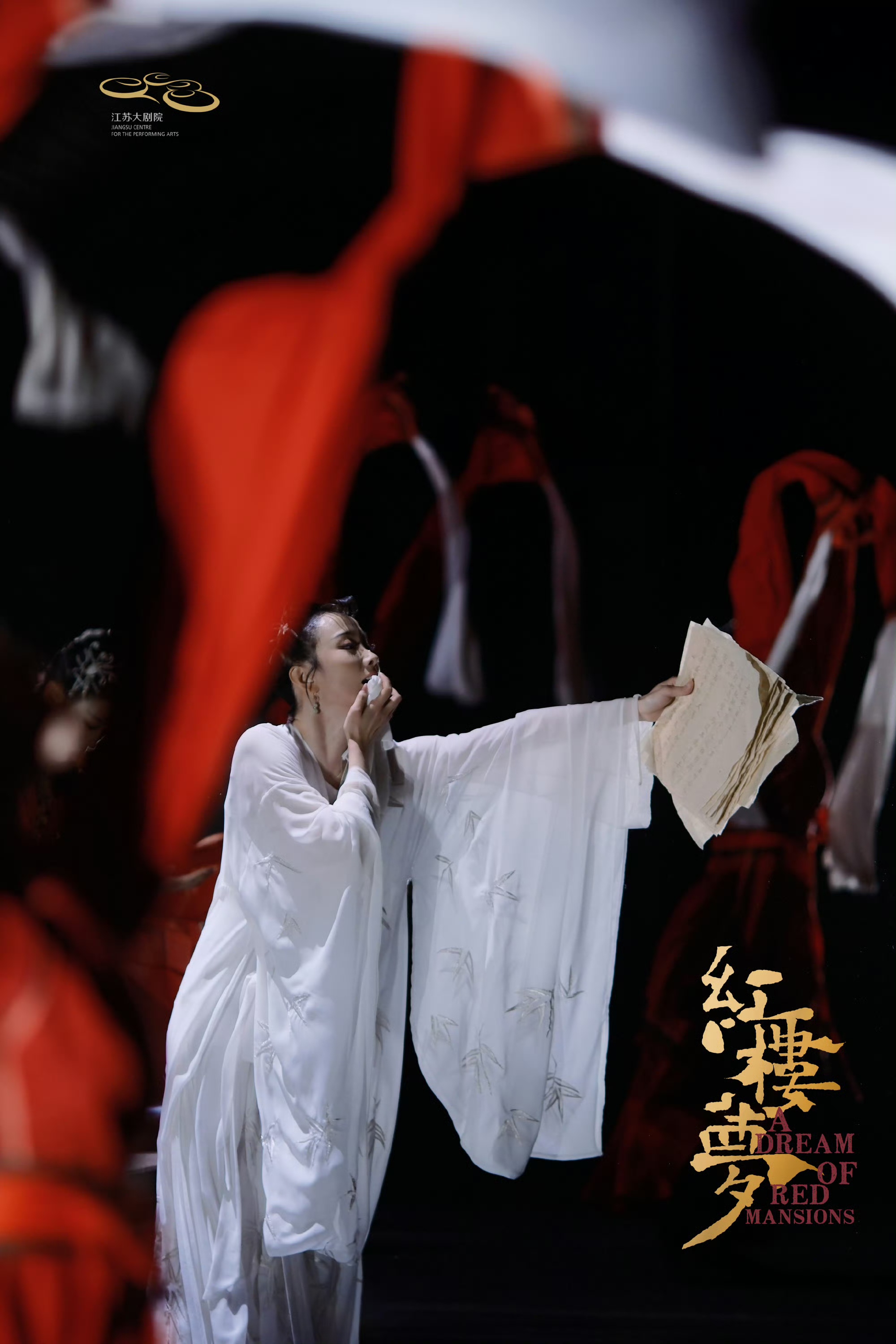
The production does not attempt to reproduce every event from the novel. Instead, it replaces the linear chain of plot with a flow of emotion and recurring images: flowers, jade, silk, screens, dreams, celebrations, and empty space. A novel speaks through words. This production speaks through bodies.
Lin Daiyu's unstable, asymmetrical movement reveals sensitivity and isolation. Xue Baochai's rounded, balanced gestures express composureand adaptability. Wang Xifeng's decisive steps and sharp gaze announce authority before a word is spoken. Through dance, the world beneath the story becomes visible.
Li Xing, Co-Director
Li Chao, Co-Director
Rather than recounting every event, the artists build the world behind the words. Emotional currents replace linear explanation. Flowers, jade, silk, screens, and empty space return as visual motifs. Each character develops a distinct language of movement. Chinese classical dance meets contemporary spatial composition. Traditional musical language meets orchestral and electronic textures.Historical research meets modern stage technology. At the center of it all remains the human body, the most immediate instrument for expressing tenderness, conflict, longing, and loss.
Since its premiere, A Dream of Red Mansions has grown beyond a stage adaptation. It has drawn younger audiences back to the original novel, traveled between cities to reach new audiences, and continued its cultural life through writing, video, illustration, and conversation.
SEP 11 - 13

%201.png)

